Adjacency
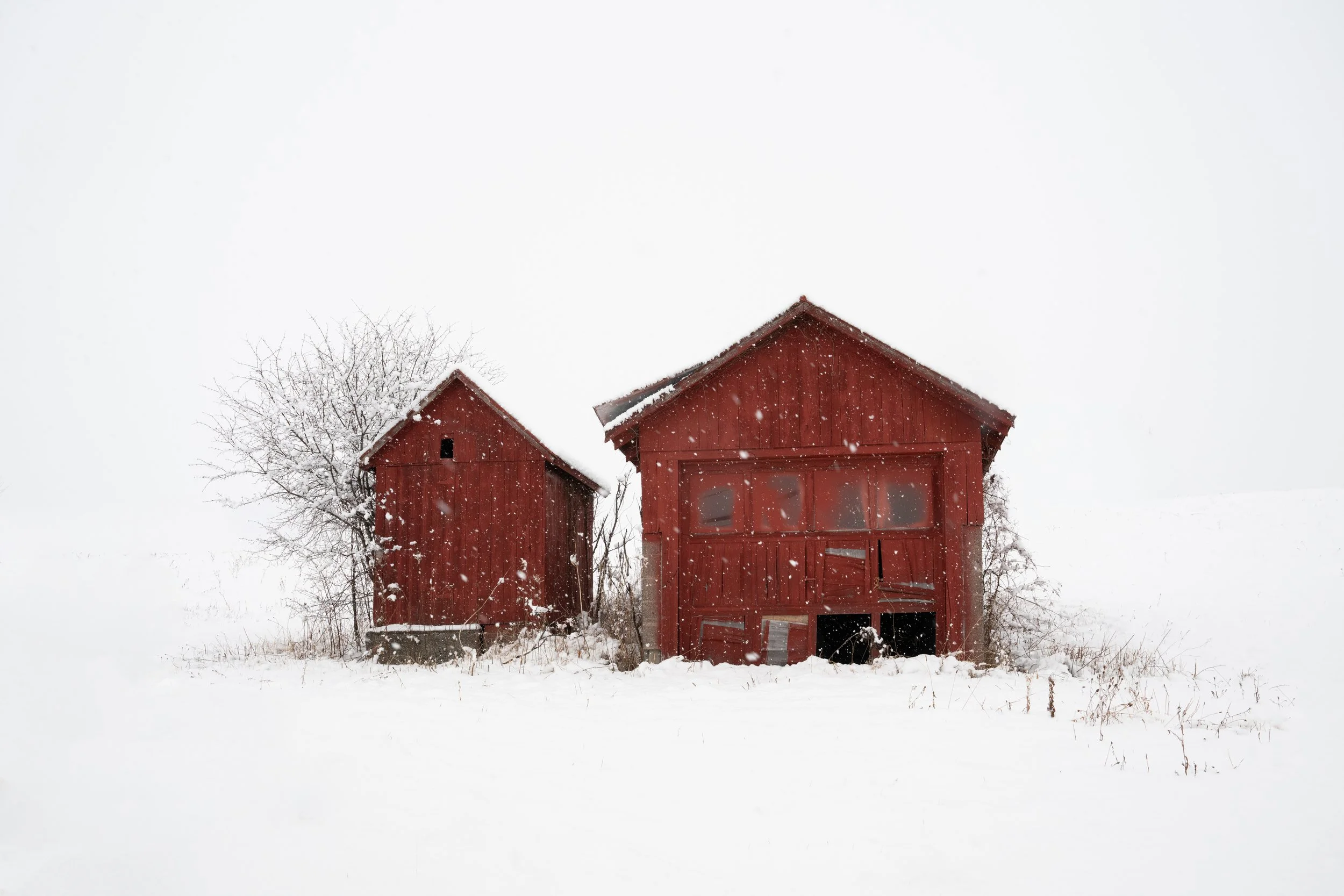
This image is quiet in a way that feels deliberate.
Two structures sit close to one another, but they don’t merge. They remain distinct—separate forms sharing the same weather, the same ground, the same silence. Snow removes distraction. The sky offers no horizon. What’s left is relationship: scale, spacing, proximity.
I’ve been thinking a lot about that lately—the space between things.
In photography, we’re often taught to focus on subject. What is it? What does it say? What story does it tell? But as my work continues to shift, I find myself less interested in explanation and more interested in balance. In how elements coexist without needing to justify themselves. In how meaning can emerge without narrative, simply through placement and restraint.
This scene doesn’t ask to be decoded. It doesn’t offer drama or resolution. It just holds.
The snow flattens everything equally. Age, function, and purpose dissolve into form. One structure doesn’t dominate the other. Neither demands attention. Their relationship is defined not by action, but by presence—by being near without touching, aligned without symmetry, connected without interaction.
That feels important right now.
As this year unfolds, I’m learning to pay closer attention to what exists quietly alongside me rather than what demands forward motion. Growth doesn’t always require separation or change. Sometimes it’s about recognizing adjacency—what has been there all along, sharing space, shaping the frame without calling attention to itself.
This image is part of an ongoing exploration of landscapes where restraint matters more than description. Where stillness carries weight. Where the absence of information invites reflection rather than confusion.
Nothing here is happening.
And yet, everything feels settled.
Sometimes that’s enough.
Held
The start of a new year always arrives with expectations attached to it. Momentum. Clarity. A sense that something should click into place simply because the calendar says it’s time.
But creativity doesn’t recognize dates.
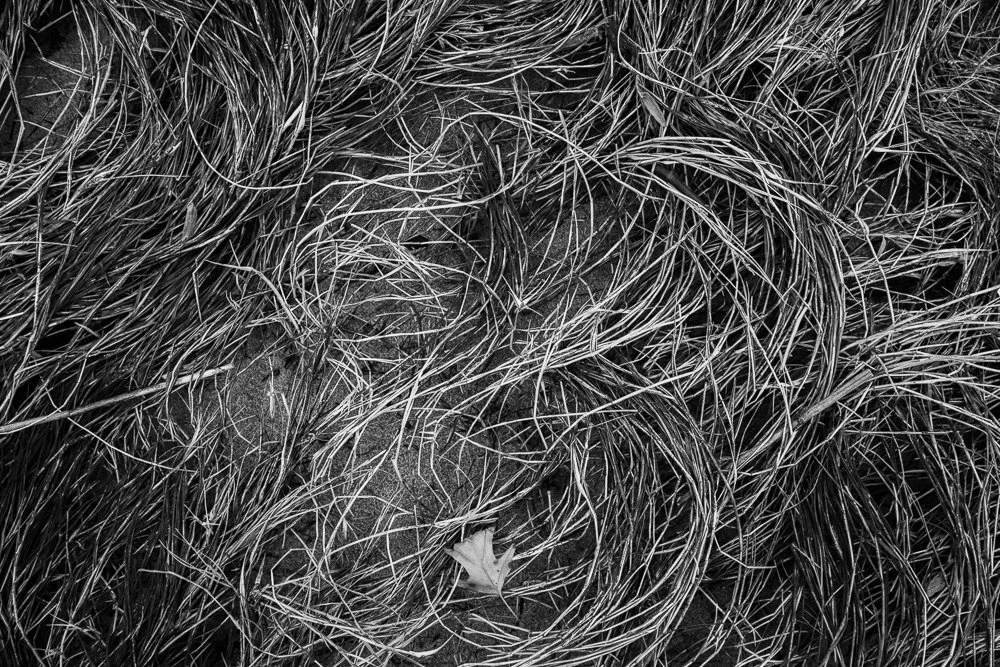
This image, Held, came from the shoreline just after high tide—one of those in-between moments that most people walk past without noticing. The ocean had already moved through and pulled back, leaving the grass pressed into itself, folded and tangled by water that never stopped to consider how it should look. The tide didn’t arrange these lines. It didn’t refine them. It simply did what it does, and left its mark.
Lately, that feels familiar.
There are seasons when creativity flows effortlessly, when ideas arrive fully formed and the work feels inevitable. And then there are seasons like this—quieter, slower, less certain. The camera still comes out. The walks still happen. But the internal response is different. The images don’t announce themselves with the same urgency. They ask for patience instead.
What I’m learning is that growth doesn’t always feel expansive. Sometimes it feels compressed. Held in place. Pressed flat by forces you don’t fully understand yet. And that doesn’t mean nothing is happening—it means something is being shaped.
The grass in this frame didn’t resist the tide. It bent, layered, overlapped. When the water receded, what remained wasn’t damage—it was evidence. Proof of contact. Proof of endurance.
As 2026 begins, I’m trying to carry that lesson forward. To keep working even when the spark feels distant. To keep trusting that learning and expansion don’t require constant affirmation. Some of the most important changes happen quietly, beneath the surface, without spectacle.
This image isn’t about arrival.
It’s about being held in a moment long enough to change.
And sometimes, that’s exactly what’s needed.
Blue Hour Ride
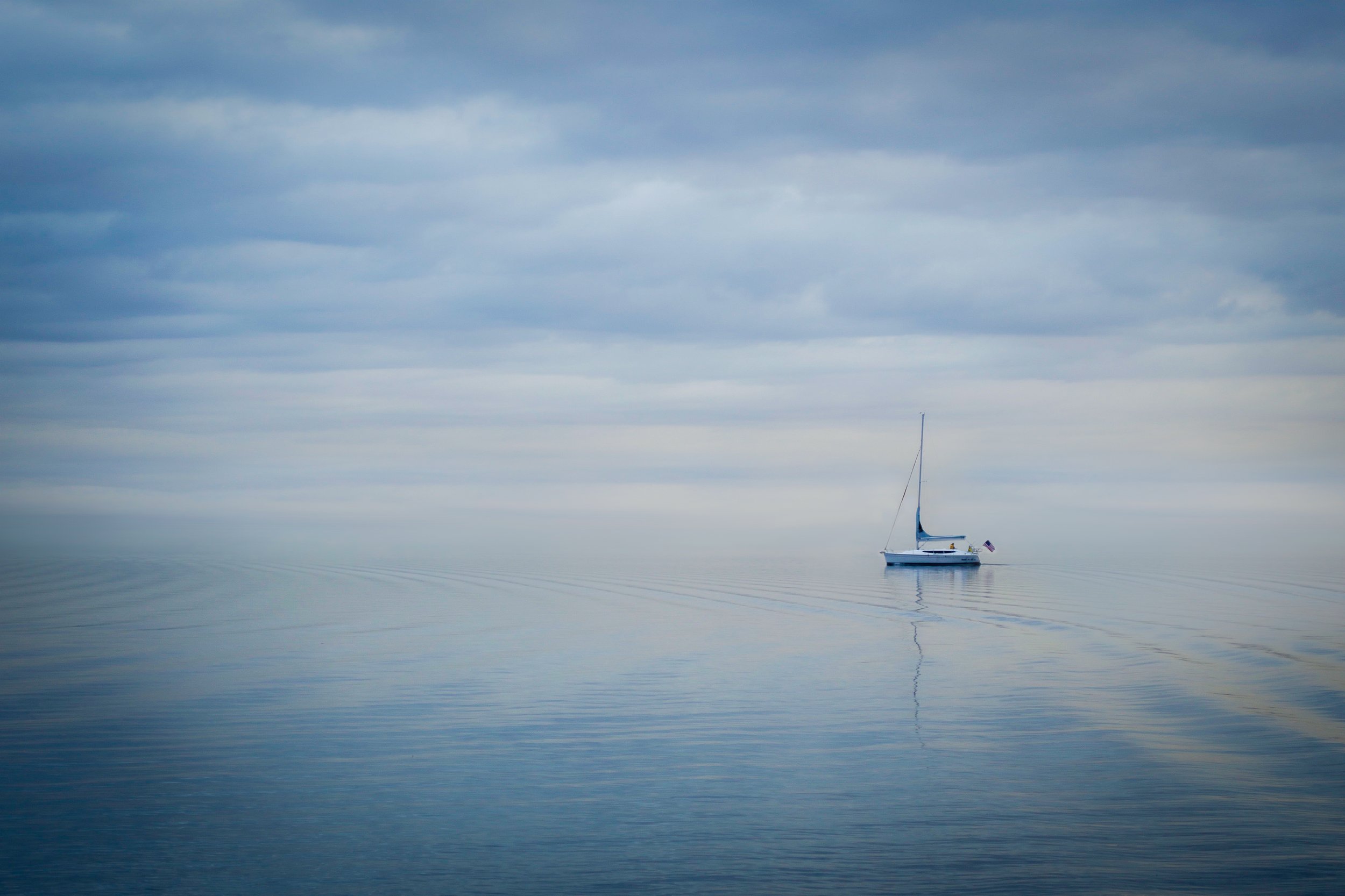
There’s a moment at the edge of day when light softens into honesty. When color drains from the sky, leaving behind only the faintest wash of blue and the sense that the world is exhaling. It’s a transition that happens quietly, without ceremony, and yet it changes everything.
That is the moment “Blue Hour Ride” was created.
From above, the ocean looked impossibly calm—more like brushed glass than water. The waves that had been breaking all afternoon softened into gentle lines, dissolving into the surface as the sun slipped below the horizon. The noise of the day faded with it. Surfers cleared the water. The beach thinned out. The world stepped back.
Then, in the middle of all that stillness, a single paddleboarder drifted across the open water.
From ground level, it would have been an ordinary scene—someone enjoying a quiet ride as the evening settled in. But from the air, everything changed. The ocean’s expanse became infinite. The paddleboarder became a point of intention. Their wake—a thin, delicate line—stretched behind them like a question mark, tracing not where they were going, but where they had already been.
That perspective, that shift in scale, is what drew me to release the shutter.
Minimalist images often look simple at first glance, but the truth is the opposite: they ask more of the viewer. When the elements are reduced, every detail gains significance—the soft gradient of the sky, the slight ripple of the water, the quiet posture of the figure at the center of it all. Nothing distracts. Nothing interrupts. You are left with pure atmosphere, pure motion, pure solitude.
What I love most about “Blue Hour Ride” is the sense of contemplation it carries. The paddleboarder is moving forward, but slowly—without urgency, without friction—almost as if they’re listening more than moving. The water around them looks weightless. The world feels suspended. And the composition invites you to stand above your own life for a moment, to see your journey with that same sense of spaciousness and calm.
Collectors often tell me this piece feels meditative—
a visual breath,
a pause,
a reminder that direction doesn’t always announce itself loudly.
Sometimes it unfolds gently, over open water, in the softest light of the day.
Featured Limited Edition Print → “Blue Hour Ride”
A modern, emotionally charged minimalist piece for contemporary interiors—perfect for collectors who appreciate quiet atmosphere, open space, and the perspective that comes only when we rise above the noise.
Yielding to the Current
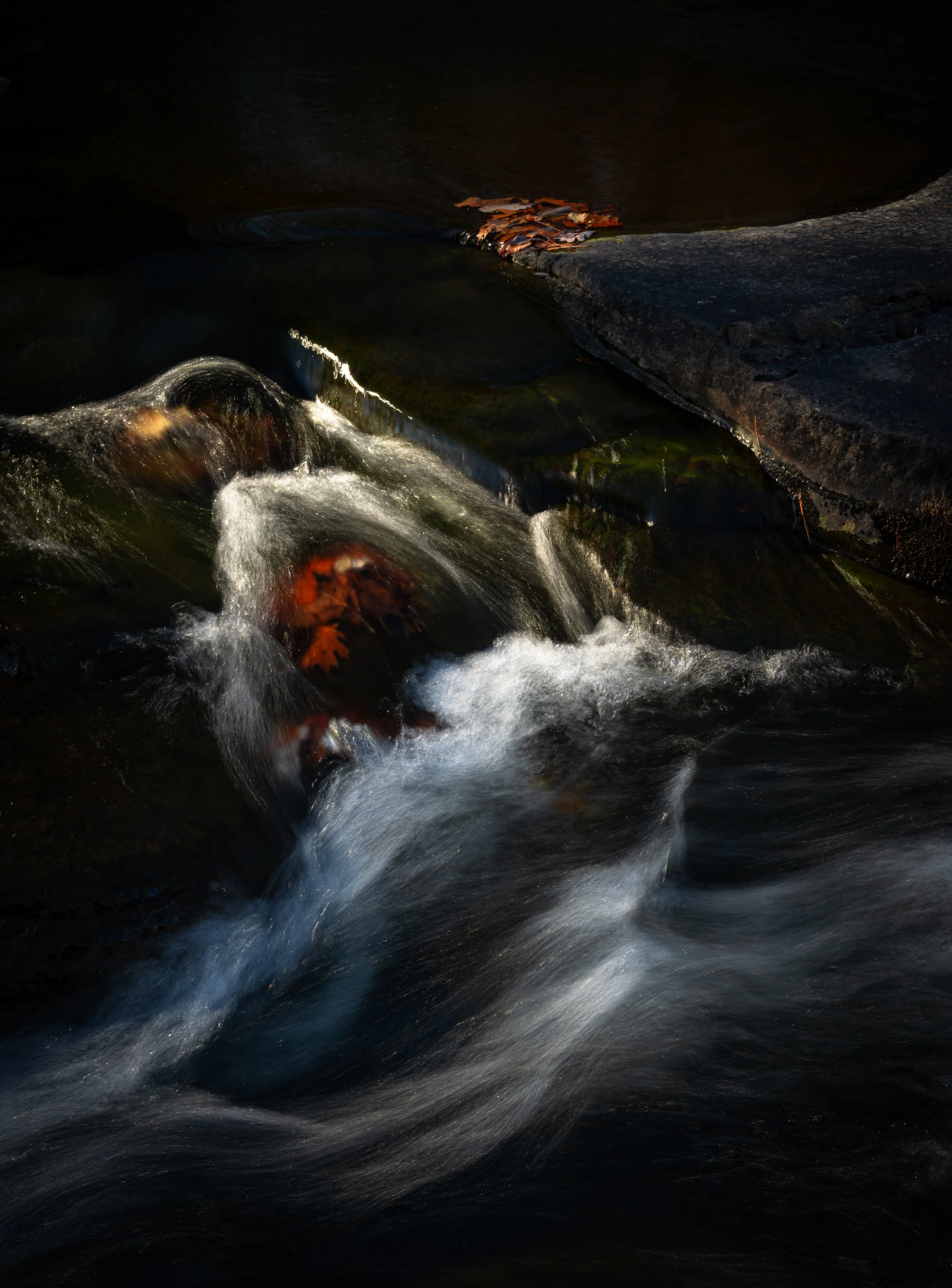
Rivers have a way of teaching us things we don’t always want to learn. They don’t negotiate. They don’t explain. They simply move—around stone, over shadow, through whatever the season has left behind. The morning I created “Yielding to the Current,” that lesson revealed itself in a small, brilliant flash of color beneath the water’s surface.
I hadn’t gone out looking for this scene. In fact, nothing about the day suggested that something meaningful was waiting. The river was running low after months of unpredictable weather, and the landscape around it looked tired, worn, and stripped of the typical autumn drama. But water has its own kind of presence, and even in its slower moments, it knows how to pull you in.
As I stepped onto a flat slab of stone and looked down into the current, I saw it—
a single red-brown leaf caught beneath the flow.
Not trapped.
Not defeated.
Just there, glowing quietly beneath the shifting light.
The river moved over it with a deliberate softness—fast enough to blur into silk around the stones, slow enough to reveal the leaf’s color in brief, flickering glimpses. It was a moment of tension and harmony at the same time: motion and stillness, darkness and illumination, force and surrender.
And that is what drew me in.
Making this photograph required patience. The light was narrow and fleeting, slipping across the surface of the moving water only when the sun emerged just enough from the clouds. I waited for the exact moment when the river’s motion aligned with that flash of color below—a collaboration between what I could control and what I simply had to accept.
The resulting image carries that balance with it.
The water surges, twisting around the stones with quiet power.
The leaf remains, offering its final color to the current.
The shadows deepen the mystery.
The light reveals just enough.
This piece is not about violence or loss.
It is about yielding—the kind of yielding that teaches us who we become when the world moves around us, when we are carried by forces larger than ourselves. It is a reminder that surrender is not the same as defeat. Sometimes, it is the beginning of transformation.
Collectors often gravitate to this piece because it represents a universal truth:
We are shaped most by the things we move through—
grief, change, seasons, growth, and the unseen currents of our own lives.
Featured Limited Edition Print → “Yielding to the Current”
A dramatic, contemplative work ideal for larger walls, statement installations, and spaces designed for reflection and emotional resonance.
What Cannot Be Dimmed
It all begins with an idea.
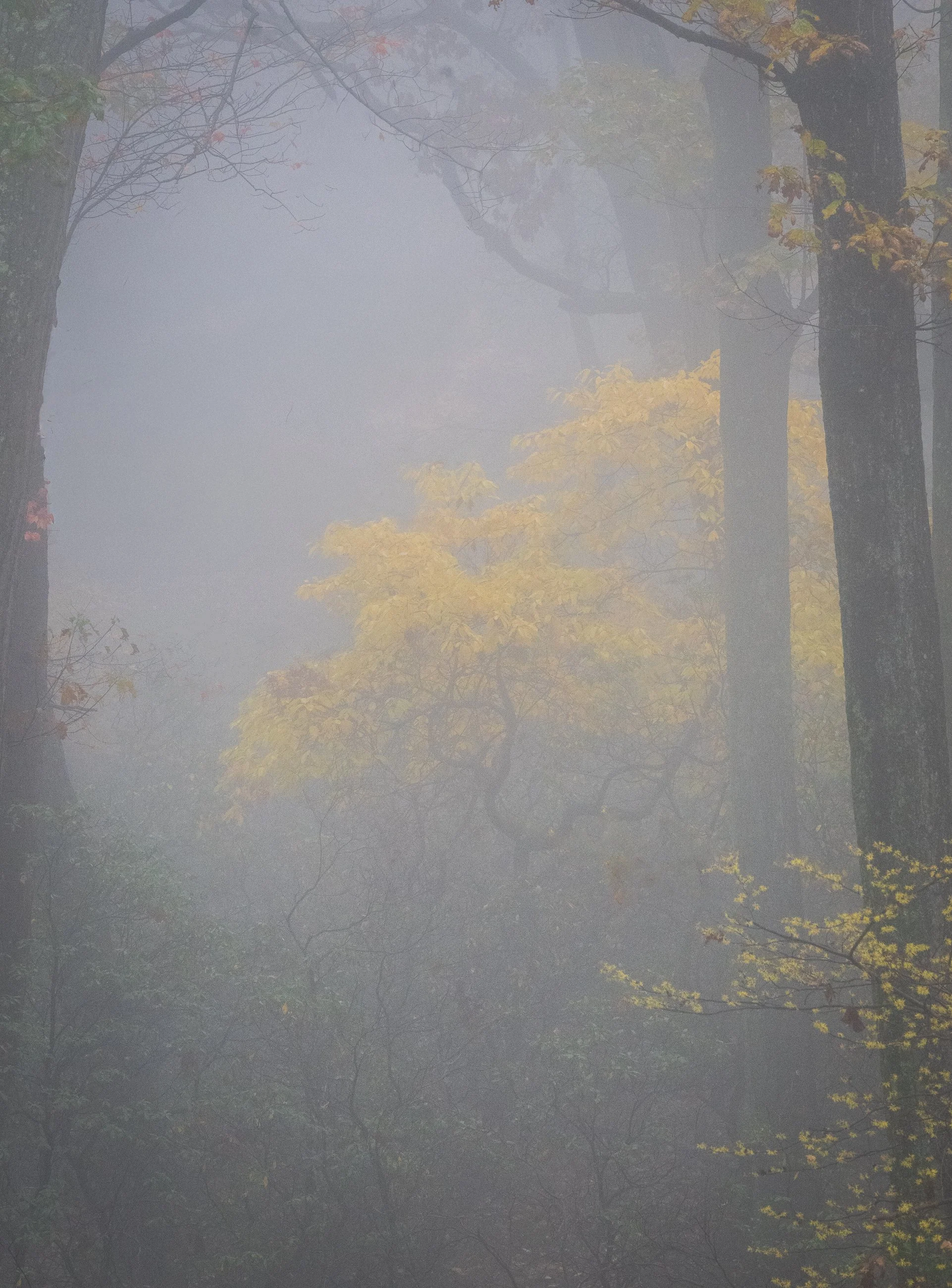
There are mornings in the forest when the world feels like it’s holding its breath. When fog hangs thick between the trees, softening the edges of everything, and even familiar landscapes become unknowable. The morning I made this image was one of those rare, sacred hours when the forest becomes less a place and more a presence.
It was the kind of fog that eats sound.
Every footstep muted.
Every exhale suspended.
Every color threatened into silence.
And yet—something glowed.
As I moved deeper into the woods, the fog only thickened, blurring the trunks into charcoal columns and dissolving the distance into pale gray. But then, through that veil, a shape emerged. A burst of yellow—soft, but unmistakably bright—rose from the undergrowth like a lantern refusing to be extinguished. The surrounding forest was subdued into monochrome, but this one tree stood defiant, lit from within by a color that refused the quiet.
That is the moment “What Cannot Be Dimmed” was born.
The more time I spend in forests, the more I believe that fog is not a filter but a truth-teller. It reveals what the eye might skip over on a clear day. It simplifies, softens, and makes us choose what we really see. On this morning, the fog didn’t hide the yellow tree—it elevated it. Removed the noise. Removed the distractions. Removed everything except what mattered.
There is something deeply human about that.
We all have seasons when the world grows muted—when life feels subdued, overcast, or weighed down by things we didn’t choose. And yet, within each of us, there are pieces that refuse to dim: resilience, memory, color, warmth, the quiet insistence that we are still here.
This print is a tribute to that persistence.
It honors the parts of nature—and the parts of ourselves—that continue to shine even when everything around them falls into shadow. The tree isn’t loud. It doesn’t dominate the frame. Instead, it glows with a soft, unwavering certainty, reminding us that luminosity doesn’t always shout. Sometimes it whispers.
Sometimes that whisper is enough.
Collectors who gravitate toward this piece often tell me the same thing: that it feels like a moment suspended in time. A breath held. A memory remembered. A reminder that beauty doesn’t disappear when the world grows hard to see—it simply becomes more deliberate.
Featured Limited Edition Print → “What Cannot Be Dimmed”
Ideal for collectors who appreciate subtle drama, atmospheric calm, and the quiet luminosity of nature revealed through fog. A soothing, contemplative centerpiece for bedrooms, reading rooms, and spaces meant for reflection.
The Weight
It all begins with an idea.
(Forest Floor Series — Story Behind the Photograph)
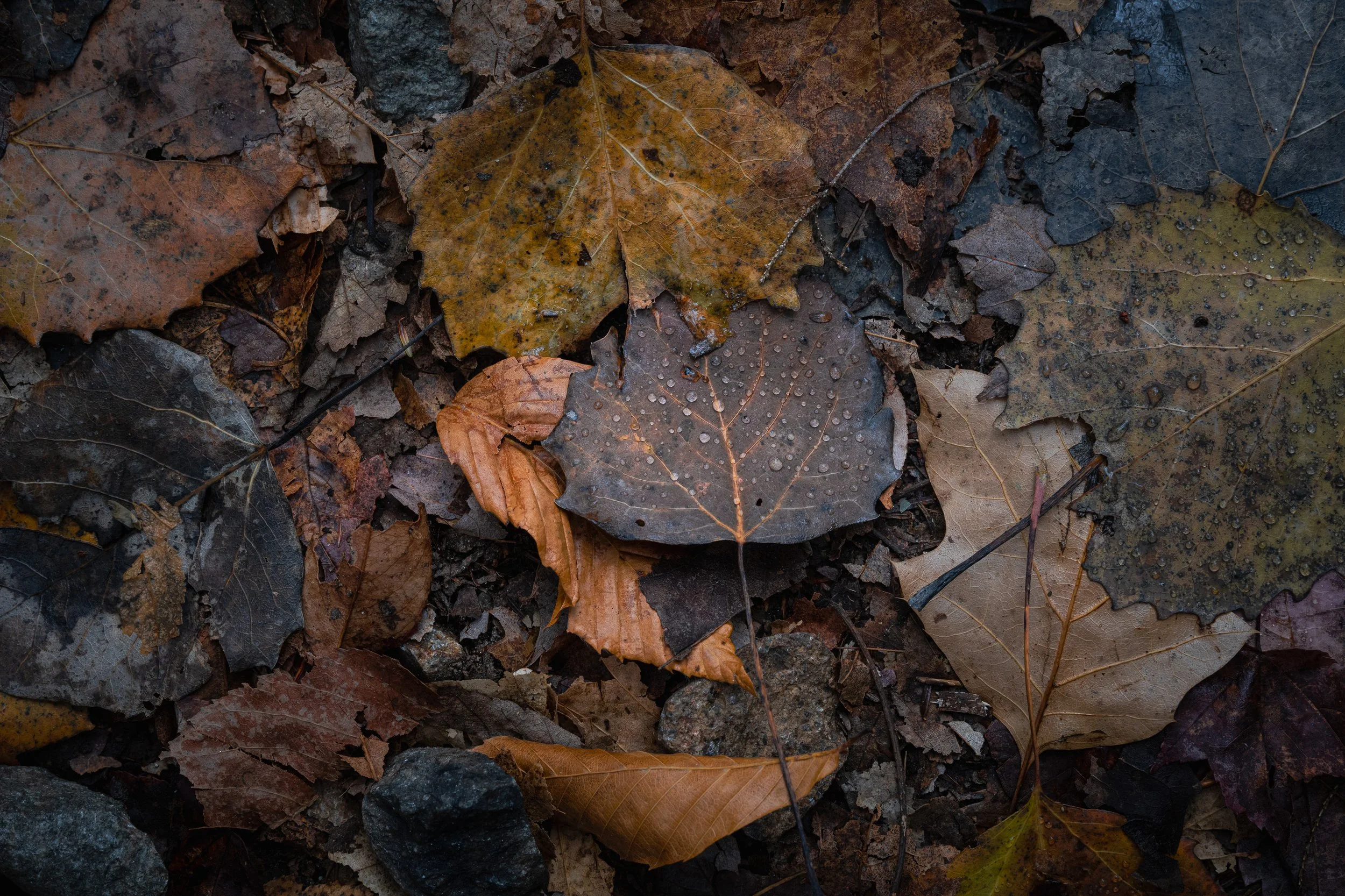
New Hampshire in late autumn carries a kind of quiet truth—the kind that doesn’t dress itself up for photographs. The week I made this image, the region was long past peak color. A persistent drought had pushed the foliage forward by weeks, leaving the forest muted, subdued, and stripped of its usual vibrancy. I had arrived hoping for pockets of color along a familiar trail, but even before stepping out of the car, I could tell that hope wasn’t going to be rewarded.
And yet, I set out anyway.
Sometimes you walk the trail not because you expect to find something, but because the act of looking still matters. The forest felt tired that morning. The trees were bare, their leaves already brittle underfoot. The world around me looked like a season rushing to finish itself. But the night had brought rain—soft, steady, cleansing. It darkened the earth, deepened the tones of the fallen leaves, and gave the forest floor a richness that wasn’t there the day before.
That’s when I saw it.
A single leaf, resting almost perfectly centered among stones, soil, and the remnants of other seasons. The world around it was a mixture of decay and muted texture, but this leaf carried a quiet presence of its own. The rain had left a constellation of droplets across its surface—each one holding a glimmer of light, each one adding a layer of meaning that felt intentional, almost ceremonial.
There is something profound about the forest floor after rain. Everything feels refreshed, but nothing feels new. It’s the domain of what has already lived, already served its purpose, already given itself to the year. And yet, somehow, these remnants speak with more honesty than the brightest foliage ever could.
This leaf felt like a truth waiting to be acknowledged.
It wasn’t vibrant.
It wasn’t dressed for attention.
It wasn’t competing with anything.
It simply was.
And in that stillness, it invited me to slow down—to see not just the leaf itself, but the life it had lived. Its edges curled with time, the veins running like memory lines across its surface, the droplets holding the last remnants of a storm that had passed. In that moment, it felt less like a fallen leaf and more like a final chapter—one filled with acceptance, dignity, and quiet resilience.
This is why I call this piece “The Weight.”
Not because it is heavy, but because it carries something essential:
the weight of seasons,
the weight of change,
the weight of noticing what usually goes unseen.
The forest floor has its own language—subtle, understated, deliberate. It doesn’t speak loudly, but it speaks honestly. And if you listen closely enough, it teaches you how to see again. How to slow down. How to appreciate the kind of beauty that asks nothing of you except attention.
This image is a reminder that meaning doesn’t always come from the grand landscapes or the dramatic conditions we chase. Sometimes it lives right beneath our feet, waiting for the moment when we’re finally willing to look down and truly see what’s been there all along.
Featured Limited Edition Print → “The Weight”
A grounding, contemplative piece ideal for intimate spaces, studies, reading nooks, and quiet corners—perfect for collectors who appreciate subtlety, texture, and the quiet honesty of the natural world.
A Luminous Surrender
(Forest Floor Series — Story Behind the Photograph)

Some photographs arrive the way we expect them to.
Most do not.
I had set out that morning with a clear vision: a stone-arched bridge framed by peak foliage, the kind of scene I’d scouted on maps, pinned on lists, and imagined for years. It was supposed to be simple—an hour north, quick setup, and then the reward of finally capturing a composition I’d been thinking about for seasons.
But disappointment showed up long before the bridge did.
Ten minutes from the location, the landscape changed. The vibrant color I’d seen on nearly the entire drive simply vanished. Hillsides thinned to dull browns, trees shed early, and the forest looked stripped of the very thing I had come for. When I arrived at the bridge, I didn’t even park. I stopped the car, stared, and felt everything inside me drop.
This wasn’t just about foliage.
It wasn’t just the sky.
It wasn’t just the harsh, unrelenting sun the Northeast had been suffering through for months.
It was cumulative.
A disappointing trip to the White Mountains.
Another to Shenandoah.
Another to the Blue Ridge Mountains.
No clouds, no mood, no atmosphere—just flatness. Emptiness. Light so harsh it cut through any chance at subtlety.
And layered behind all of this was something else:
I had just been laid off.
I suddenly had more time than I’d had in years, time I thought I’d use to create, to chase conditions, to make the kind of images I had always postponed for “when life slows down.” And now that it had slowed, the environment refused to cooperate. Every unmade image began to feel heavier. The frustration wasn’t artistic—it was personal.
So when I looked at that bridge and saw nothing worth lifting the camera for, it wasn’t photography that broke me open. It was the realization that nothing was working—not the skies, not the season, not the plans, not the sense of direction.
I drove off. No highway, no GPS guidance, no destination. Just back roads—the kind that sometimes redeem a failed outing with a forgotten barn or a lone tree in a field. I needed the possibility of surprise. Anything to feel like the day wasn’t wasted.
Thirty minutes later, I stumbled upon a river.
The foliage there was gone too.
The bridge nearby had potential, but the sun was too harsh, carving deep shadows without depth or nuance.
Yet I parked anyway.
Not to shoot.
Just to breathe.
I walked out onto the large rocks in the river, hands empty, camera still in the car. The water moved slowly—just enough to hypnotize. Despite the long stretch of dry weather, the current carried a soft, rhythmic murmur, and the ripples caught the late daylight in a way that felt unusually intentional.
And then I saw it.
A single leaf, pinned gently under the water’s surface, glowing softly.
Not bright—just unmistakably present.
It reminded me of a Mike Shainblum video I’d once seen, where he’d photographed something similar. But the inspiration wasn’t what made me run back to the car. It was the certainty. The immediate knowing: This was the image I came for, even if I hadn’t known it yet.
I didn’t bother with a tripod. I wanted to remain nimble, ready for the light to shift. Standing on the river stones, camera in hand, I watched the water slide over the leaf like a veil. And as I looked through the viewfinder, I found myself thinking:
Where did this leaf begin?
How long had it held fast to its branch?
What storms had it endured?
When did it finally let go?
And what had it witnessed during its season of giving life?
Now, beneath the water, it would continue giving—to microorganisms, to the river, to the quiet cycle of return that the forest floor understands better than we ever will.
The calmness of that leaf beneath the current—completely at peace with its fate—hit me harder than I expected. It glowed as though it had been placed there on purpose, caught in its final moment under a curtain-call spotlight. The frustration of the morning dissolved. The failed foliage hunt, the lifeless skies, the weeks of chasing conditions that never came—all of it fell away.
This was the image.
Not the bridge.
Not the foliage.
Not the plan.
This.
A moment so small I might have overlooked it on any other day. But after everything—after disappointment, after directionless driving, after weeks of unmet expectations—this quiet, luminous surrender felt like an answer.
A reminder that beauty doesn’t always reward the plan.
Sometimes it rewards the letting go.
And as I stood there watching the leaf rest in its final stillness, I understood something I should have remembered all along:
Every time I think I’ll come home empty-handed, nature gives me something else—something I didn’t know I needed until the moment I see it.
This one is among my favorite images I’ve ever made.
Because it didn’t just show me something beautiful—
It reminded me why I photograph at all.
Featured Print — “A Luminous Surrender”
A deeply meditative piece from the Forest Floor Series, created during a moment of emotional clarity and profound quiet. Ideal for collectors who seek meaning, subtlety, and the beauty that emerges from surrendering expectation.
Where We Are Held
(Forest Floor Series — Story Behind the Photograph)
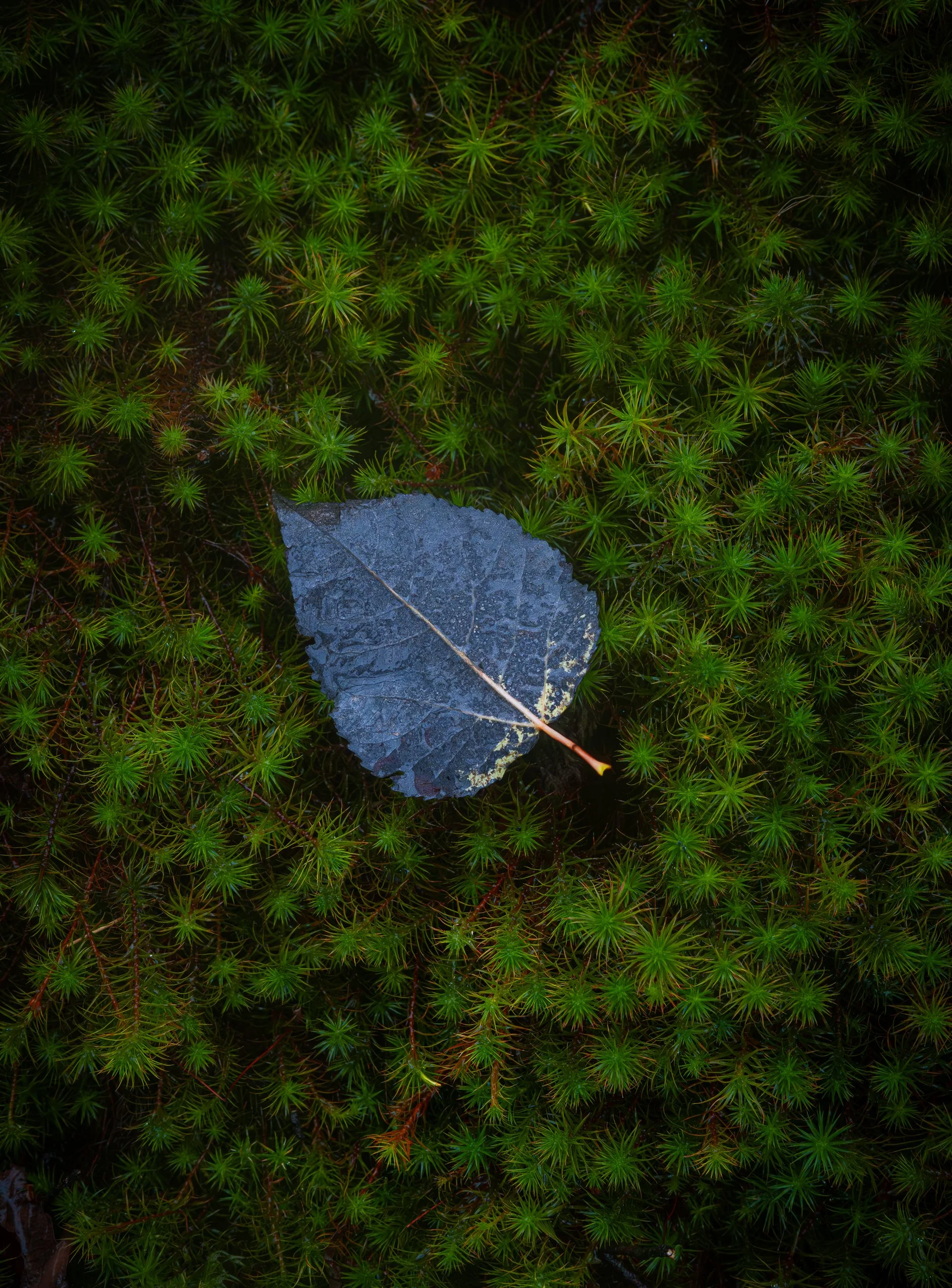
Hiking Bear Mountain in November is a lesson in humility. The day I made this image, the mountain offered nothing willingly. Rain had been falling since dawn; cold, bitter, sharp enough to turn each breath into steam. Fog clung to the forest like a second bark, softening trees into pale silhouettes and muting the entire landscape into a watercolor wash. On days like this, you don’t go out expecting comfort; you go out hoping for revelation.
I was hiking with a close friend that morning, a photographer I’ve admired for years, someone whose eye finds structure in chaos, someone whose compositions have shaped how I think about my own work. He knows this mountain as well as some people know their childhood streets. He’s climbed it in blistering heat, deep snow, and everything in between. And yet that morning, even he found nothing. He had hoped my “fresh eyes” on his familiar terrain would spark something he hadn’t yet seen. But the truth was unavoidable:
We were both fighting the forest.
Anyone who has tried photographing inside densely wooded terrain knows the frustration. The compositions feel too busy, too layered, too inconsistent to hold together in a single frame. In wide-open spaces, I feel at home. The forest interior, though? That’s always been harder. My eyes reach outward—not inward. When everything intersects - branches, brambles, shadows, glistening wet bark- the camera wants simplicity, and the forest rarely cooperates.
After forty-five minutes of climbing toward the summit, the rain intensified enough to drum on our hoods. The fog was mesmerizing, almost transcendent, but the images were not. We stopped. We scanned. We waited. Nothing held long enough to become a photograph.
And this is where years of frustration finally taught me something:
When the scene ahead refuses to speak, look down.
The forest floor has become a refuge for me, a place where overwhelming complexity collapses into clarity. A place where the stories of a landscape settle, gather, and wait with patience. And on that rain-soaked trail, the moment I lowered my gaze, the entire mountain changed.
Resting gently on a bed of moss was a single blue-tinged leaf -no bigger than my palm-held softly by the forest floor beneath it. Moss cradled it like a cushion, almost as if the forest had placed it there deliberately. The surrounding world was wet, tangled, and chaotic, yet this one small scene felt impossibly intimate. Quiet. Tender, even.
It stopped me immediately.
There is a rare kind of calm that exists on the forest floor in late autumn. Everything that once reached upward eventually returns downward, folding back into the earth to begin again. Leaves become shelter. Moss becomes cradle. What falls finds a place to be held.
This image “Where We Are Held” is my attempt to honor that moment.
It’s the kind of scene that reveals itself only when you shift your attention from searching to noticing. From forcing to accepting. From wanting a grand moment to receiving a small one.
The blue leaf, resting gently on the moss, taught me something that morning:
We are all held by something;
a memory, a place, a season, a person,
or the quiet truth that rest is not weakness
but a necessary part of becoming.
In a year marked by uncertainty and transition, this small moment of stillness spoke louder than any sweeping vista ever could. It reminded me that serenity doesn’t always come from the top of the mountain. Sometimes it’s waiting at your feet.
Featured Limited Edition Print “Where We Are Held”
A serene, contemplative work from the Forest Floor Series, celebrating quiet resilience and the gentle spaces that catch us when we fall. Ideal for collectors seeking art that brings peace, grounding, and emotional depth into the home.